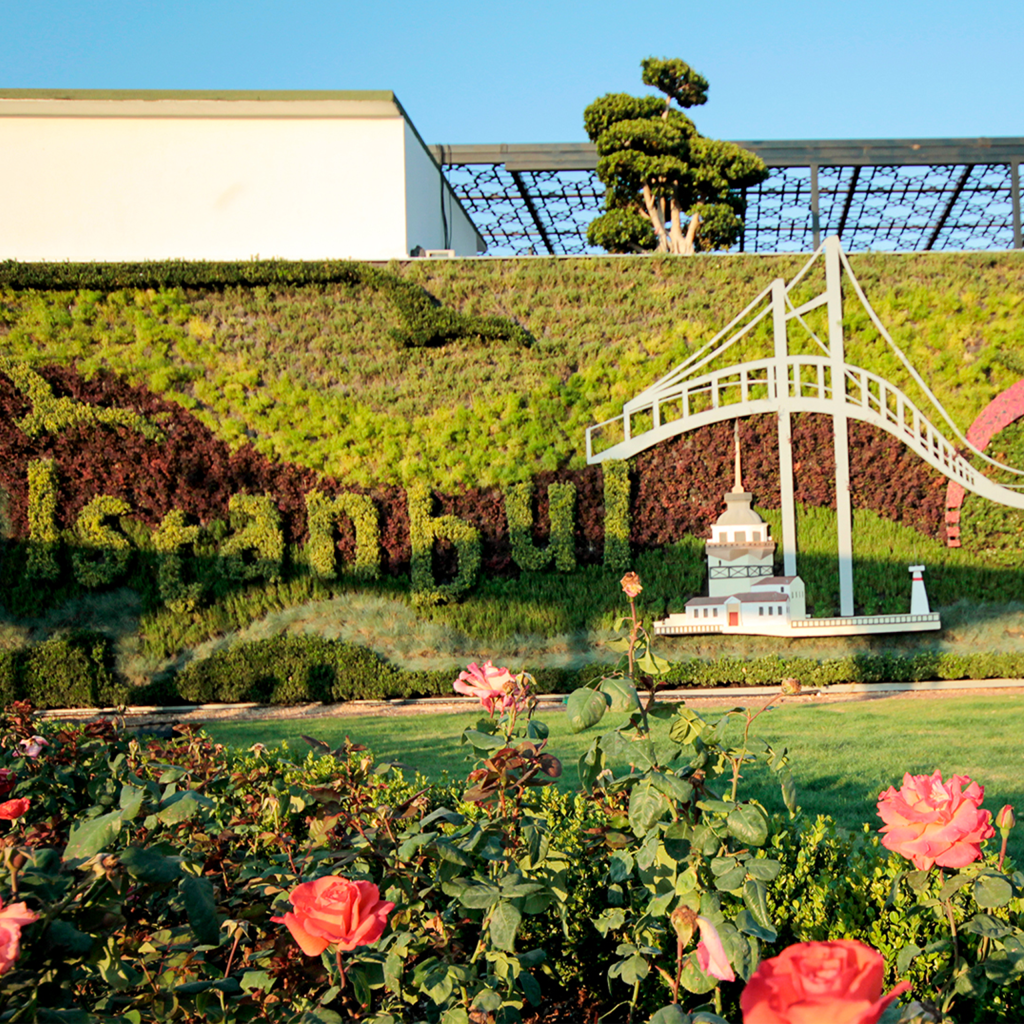
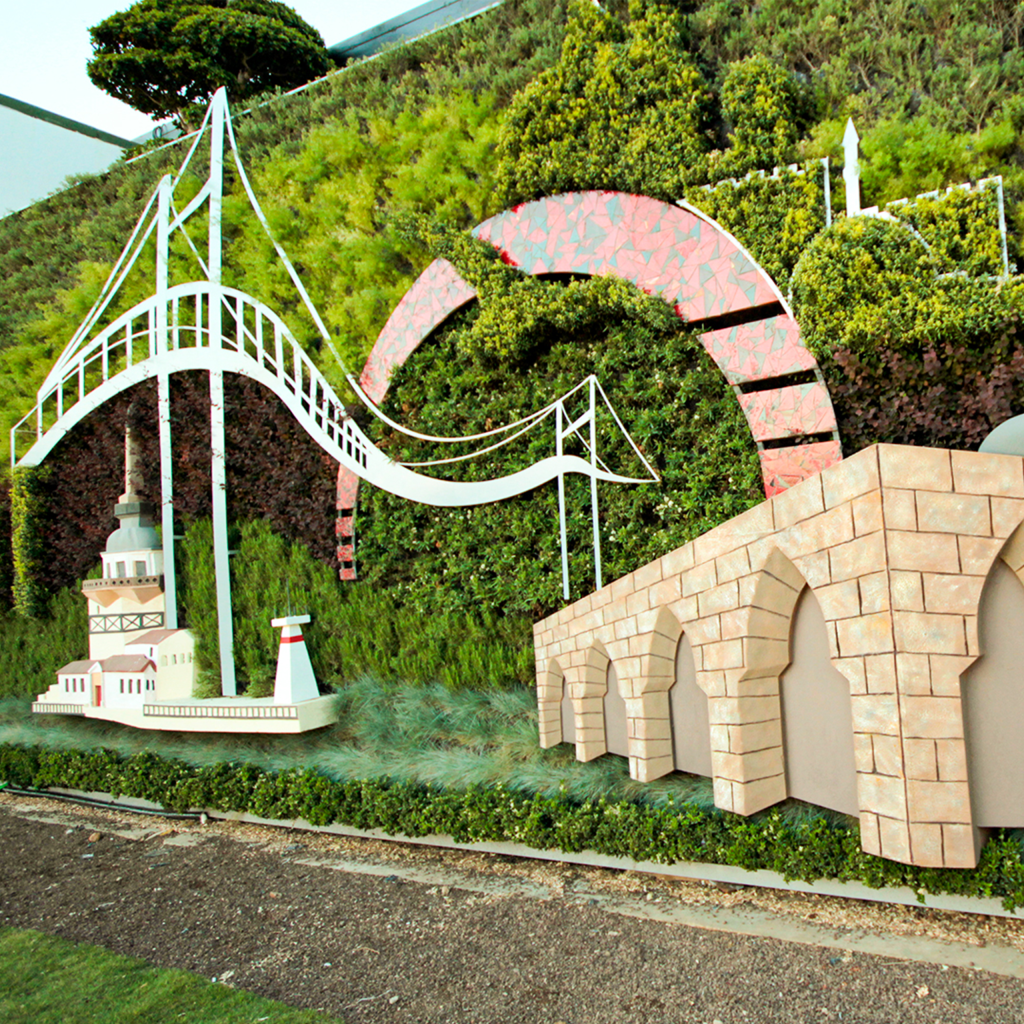
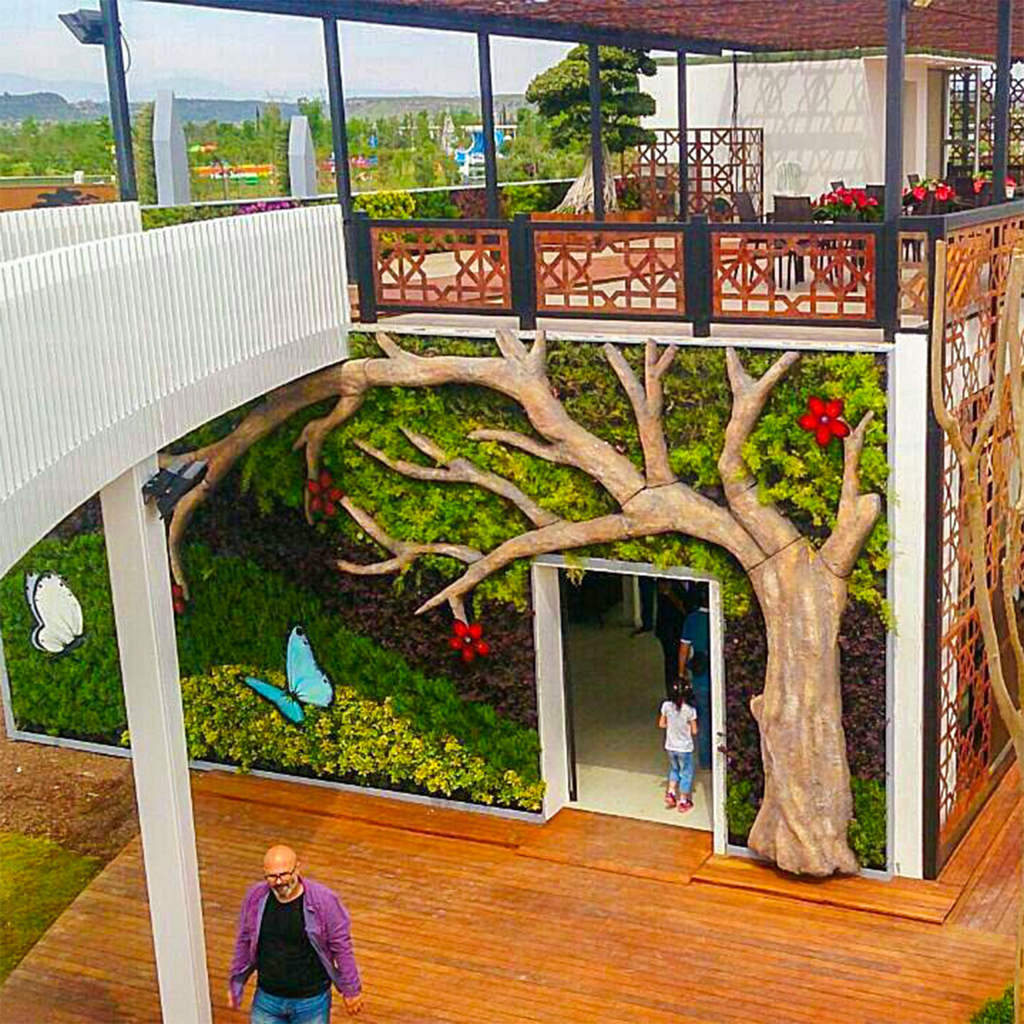
Silvanus’ vertical garden project at Expo Antalya is an example of presenting Istanbul’s historical values in a modern way and adding a new richness to the city. The project was realized on an area of 300 square meters and a total of 10,000 plants were used. These plants were placed on the walls using vertical gardening technology to create living walls.
Project Overview
Silvanus undertook the design and implementation of massive vertical gardens (living walls) for the EXPO area. This project was not just a decorative element but a structural integration of nature into the EXPO’s theme: “A Green Life for Future Generations.”
Key Challenge: Creating a sustainable living system capable of thriving in Antalya’s high-temperature climate.
Historical Values
Today, vertical gardening is increasingly preferred as an environmentally friendly and aesthetic practice. Silvanus, following this trend, has added an aesthetic richness by combining the historical and cultural values of Istanbul with vertical garden projects. The numerical data of the project also presents a very impressive image. 10,000 plants were used in an area of 300 square meters. These plants have created living walls thanks to vertical garden technology, allowing nature to come alive again in the city.
A Landmark in Green Engineering. The EXPO 2016 Antalya project stands as one of the most significant milestones for Silvanus. As a global platform for horticulture and sustainability, EXPO Antalya required a vertical garden application that met international standards for both aesthetics and technical durability.
The Healing Power of Nature
Istanbul is a historically and culturally rich city, and by combining these riches with modern applications such as vertical gardens, it is possible to increase the aesthetic value of the city. The symbols used in this project, such as the Maiden’s Tower, the Bosphorus and the Istanbul script, represent the historical heritage of Istanbul. By combining these symbols with vertical gardens, they can help revitalize the city’s historical and cultural heritage.
Silvanus’ vertical garden project at Expo Antalya has added a new richness to the city by presenting the historical and cultural values of Istanbul in a modern way. The numerical data of the project shows that it is possible to revitalize nature in the city with vertical gardens. Therefore, this project can serve as an example for other vertical garden projects in historically and culturally rich cities like Istanbul.
A balance between the preservation of historical sites and modern urbanization practices can ensure the sustainable development of our cities. Vertical gardens create a natural view among the concrete piles of cities and provide a breathing space for people to breathe in their stressful lives.
Improves Air Quality
The EXPO Antalya Vertical Garden project reflects Silvanus’s expertise in large-scale green infrastructure. We implemented advanced systems to ensure the longevity of the plant life.
In addition, another advantage of vertical gardens is that they improve the air quality of cities. Vertical gardens contribute to people’s respiratory health by cleaning the air. Therefore, it is very important that vertical gardens become widespread to ensure that our cities have a cleaner environment.
Silvanus’ vertical garden project can set an example not only for Istanbul but also for the whole country. Turkey is a country rich in history and culture, and these riches can be integrated into modern urbanism practices by combining them with vertical gardens. Thus, our cities can become more livable and aesthetic.